Get in touch
Helpdesk :
Marketing :
Counselling :
Partnerships :
Reach us
S-3, III Floor, 16, Bittan Market, E-5, Arera Colony, Bhopal, Madhya Pradesh 462016

©2024 iKounselor Ed. Tech | Crafted by Urbanhub Innovations
17 December, 2024
.jpg&w=3840&q=75)
Canada has twinkled in the eyes of international students, especially Indian students, for a long. Its world-class education and welcoming culture attract students like a magnet. But lately, there's been a storm of rumours flying around—Canada tightening its visa policies, fewer jobs, rising costs, and even students being "sent back." It can be the effect of some notable news published in The Indian Express, Canada witnessed a 48% drop in the approved study permits (January to June) compared to 2023, with approval rates slipping from 58% to 51%—both below the government’s target of 60%.
Let iKounselor, study abroad consultants in Bhopal serving PAN India, push the brakes on panic. Canada continues to flash at the top spots for students from India & it's not as scary as it sounds. This content piece, Understanding the New Visa Rules for Indian Students Planning to Study in Canada, will cut the noise, clear up the myths & get to the facts.
Stick around, read the full article and know the truth you’ve been waiting for!
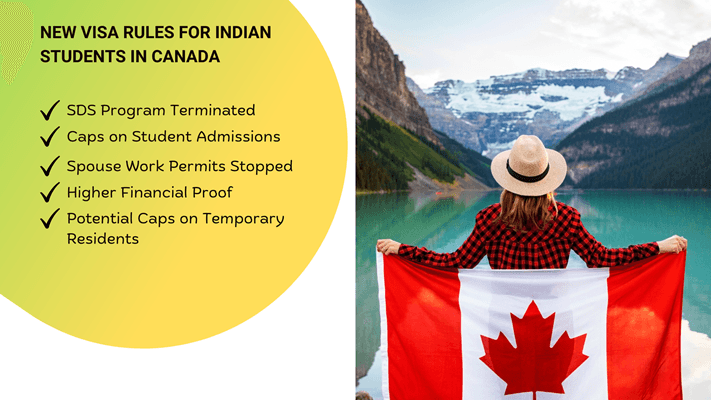
Before landing straight on the facts and myths, we want to update you on the current scenario on the Visa front. From tougher financial requirements to changes in work permits and even caps on student numbers, things have shifted quite a bit. Here’s a glimpse of the new visa rules for Indian students in Canada. We have simplified them for you.
So, these were the recent Canadian student visa changes for students from India. Now, it’s time to bust the rumours flying around.
Also Read: Top 10 Myths About Studying Abroad in 2024
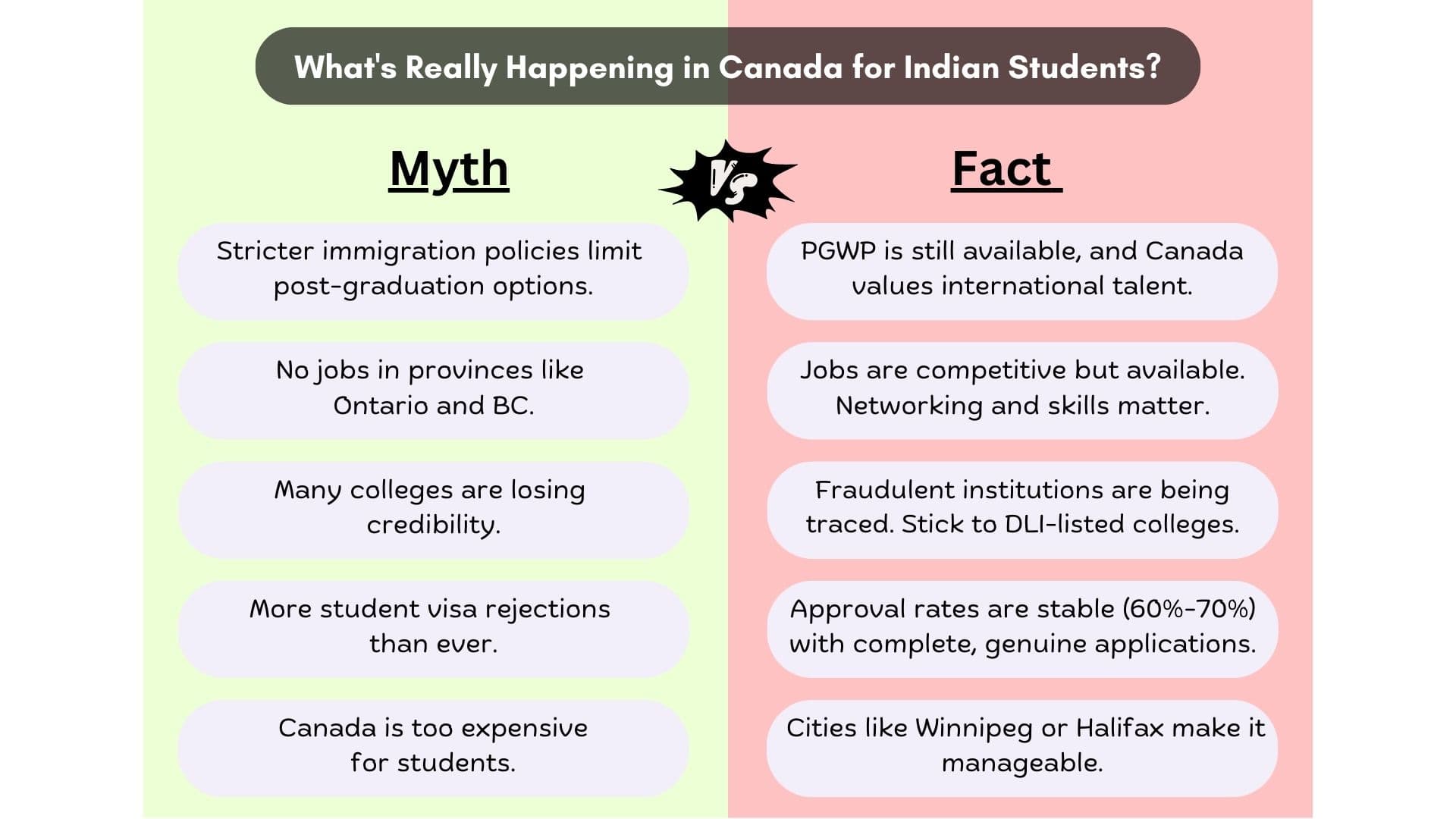
Myth 1: Canada's stricter immigration policies limit post-graduation options for International students.
Fact: The Canadian government has indeed reviewed immigration rules recently, focusing on transparency and fair practices. However, programs like the Post-Graduation Work Permit (PGWP) remain accessible for eligible students. Reliable sources like the IRCC (Immigration, Refugees and Citizenship Canada) confirm that Canada still values international talent.
Myth 2: There are no jobs for international students, especially in provinces like Ontario and British Columbia.
Fact: While competition is intense in popular cities, Canada’s job market still has room for skilled individuals. Networking, local work experience, and adaptability are key. The recent updates to the labour market impact assessment (LMIA) system aim to ensure fair job opportunities for all.
Myth 3: Many colleges are losing credibility, leaving students stranded.
Fact: There have been instances of fraudulent institutions, but the government has cracked down heavily on these cases. Stick to colleges and universities listed on the Designated Learning Institution (DLI) list to ensure your program qualifies for a study permit.
Myth 4: Canada is rejecting more student visas than ever before.
Fact: Visa approval rates fluctuate due to incomplete applications and over-representation in certain programs. Recent reports indicate a visa success rate of 60%-70% for Indian applicants who meet eligibility requirements and provide genuine documents.
Myth 5: Canada is unaffordable for international students now.
Fact: While inflation has impacted living costs, budgeting and opting for affordable housing can help. Cities like Winnipeg and Halifax offer high-quality education and lower costs compared to Toronto or Vancouver.
Planning to study in Canada? It’s a great choice! But before you pack your bags, it’s important to understand the visa process, including eligibility criteria and financial requirements. Let’s break it down for you in simple terms.
To get a Canadian study permit, students from India need to meet a few key requirements:
Here’s how you can show you have enough funds:
Why This Matters
Meeting these financial and eligibility requirements is the key to getting your Canada student visa approved to study abroad. With proper preparation and all the right documents in place, your dream of study in Canada can turn into reality.
Canada student visa checklist for Indian applicants
To make your journey hustle-free and prepare in advance to Study in Canada follow this student visa checklist given below:
Wait! Don't panic looking at the list because iKounselor is here to handle it all. We assist you with everything about study abroad, right from your first counselling to successfully landing you at your dream university abroad.
Take Your First Step, Book a FREE Consultation with us!
Conclusion
The situation in Canada for students from India looking to study abroad is dynamic. Understanding the New Visa Rules for Indian Students Planning to Study in Canada, you might be sure that it is far from discouraging. By staying informed, choosing authentic sources, and seeking guidance from experts like iKounselor, students can navigate these challenges confidently.
Frequently Asked Questions (FAQs) for Current Scenario about Canada for Indian Students
Starting January 2024, students from India must show:
You can prove this with:
2. Can spouses of Indian students still work in Canada?
Not for everyone. From April 2024, only spouses of students enrolled in master’s, doctoral, or professional programs can apply for work permits. Others won’t be eligible.
3. What happened to the SDS program?
The Student Direct Stream (SDS) program will stop on November 8, 2024. This means faster visa processing under SDS won’t be available anymore. Applications will follow the regular process, so apply early to avoid delays.
4. Are study permit approvals declining?
Yes, approval rates dropped slightly to 51% in 2024 (from 58% in 2023). The main reasons? Incomplete applications and over-representation in some courses. But if you meet all requirements and apply to a Designated Learning Institution (DLI), your chances remain good!
5. Is Canada still affordable for Indian students?
Yes, it is! While costs have risen, you can save money by:
Smart budgeting and planning make Canada a great option for international applicants.

Read More
.jpg&w=3840&q=75)
.jpg&w=3840&q=75)
.jpg&w=3840&q=75)